Miami Real Estate & Culture · November 15, 2026
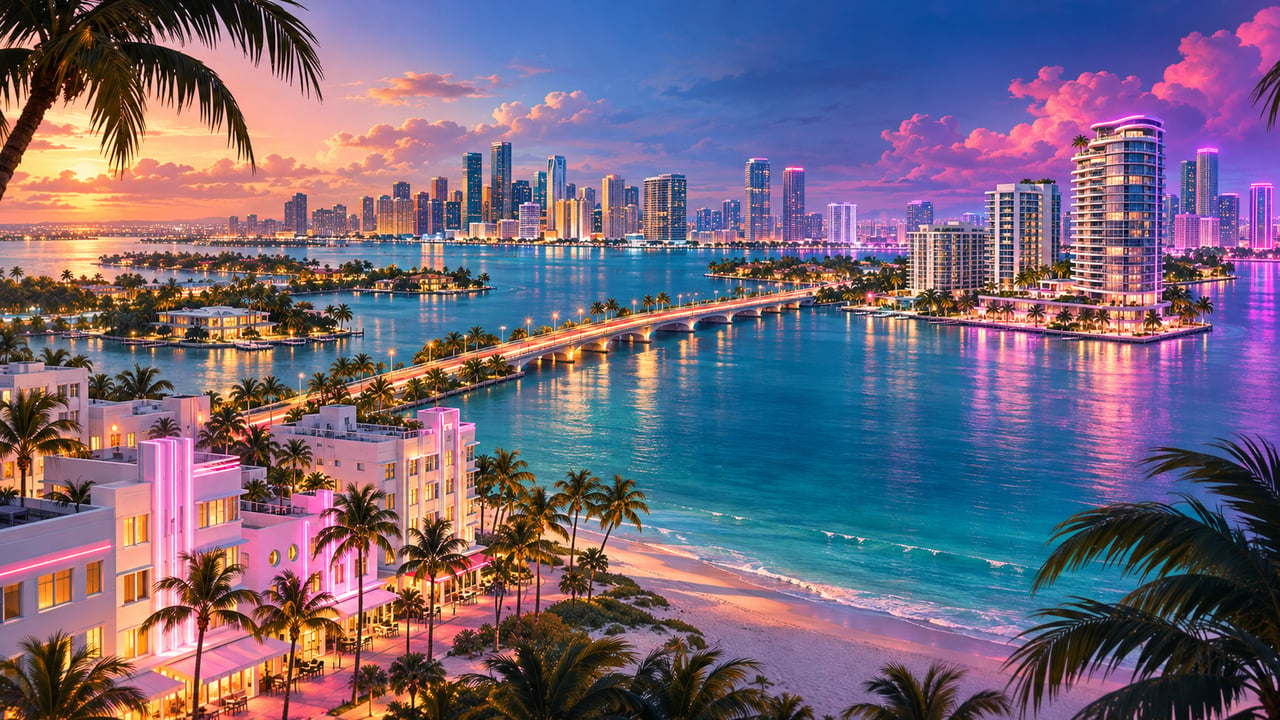
What happens when a city becomes a place that people around the world do not simply watch—but explore, return to and learn by heart? With Grand Theft Auto VI bringing players back to Vice City, Miami is about to become part of that experiment.
For Miami homeowners and real estate investors, the interesting question is not whether the game will attract attention. It is whether that attention can translate into something more durable: visits, local spending, business activity and, eventually, demand to own a piece of the real city.
There is an opportunity here. There is also plenty of room to confuse a powerful marketing moment with an investment thesis.
Our view: GTA VI may strengthen Miami’s global visibility, but visibility alone does not justify paying more for a property. Understanding the difference is where the real estate conversation should begin.
In this article
- Why this is more than another Miami advertisement
- What Los Angeles and GTA V can actually teach us
- How attention could reach the property market
- The architecture: real Miami versus its digital counterpart
- How Vice City is appearing across Miami
- The benefits, risks and local trade-offs
- What investors should watch next
Miami Is Not Just the Backdrop. It Is Part of the Product.
Miami has never struggled to attract a camera. Its beaches, architecture and waterfront homes have appeared in films, television, music videos and advertising for decades. The city already knows what it means to become an image.
A detailed, interactive world offers something different. A viewer sees a location briefly. A player can spend hours navigating a fictional version of it, recognizing intersections, returning to favorite districts and developing a sense of familiarity without ever visiting.
That is the potential significance of Vice City for Miami: repeated exposure to a place rather than a single impression. The game does not need to function as a tourism advertisement for its setting to create curiosity about the real city.
Rockstar currently schedules GTA VI for November 19, 2026, on PlayStation 5 and Xbox Series X|S. Its fictional setting, Leonida, includes Vice City and landscapes beyond the city itself. The South Florida connection is central to its visual identity.
Source: Rockstar Games’ official GTA VI website
Watch the Official Trailer
Official trailer from Rockstar Games. Mature content. Also watch Trailer 2 and the Launch Trailer.
What Happened With Los Angeles After GTA V?
The relevant comparison is GTA V’s Los Santos, the fictional interpretation of Los Angeles—not GTA VI, which returns to the Miami-inspired Vice City.
Los Santos shows how recognizable architecture, roads, beaches and neighborhood contrasts can become familiar to people who have never set foot in the real place. It also illustrates why video games deserve a place in conversations about destination marketing.
A 2025 case study by Nikola Nikolić and Miljan Leković examined GTA V’s presentation of Los Angeles as a tourism destination. The authors discuss how the game represents attractions, culture, atmosphere and potential visitor experiences.
The limitation matters: this was not a study establishing an increase in Los Angeles property values attributable to GTA V. The authors also identify the need for further research into players’ motivations to visit.
The lesson for Miami is familiarity, not a guaranteed price increase. A game can help people recognize and imagine a destination. Whether they visit, relocate or buy property requires additional decisions—and additional evidence.
We would not attribute changes in Los Angeles home prices to GTA V without separating the influence of employment, housing supply, financing conditions and the broader economy. Miami deserves the same discipline.
How Could the GTA 6 Effect Reach Miami Real Estate?
The connection is a series of possible steps, not an automatic jump from game sales to condominium sales.
Global attention → curiosity about Miami → actual visits → local spending → possible repeat visits, business interest or relocation.
Each step needs evidence. Not every interested player becomes a tourist, and very few tourists become property buyers.
1. Hospitality Has the Most Direct Potential Connection
A visitor arriving to experience the real Vice City needs somewhere to stay, eat and spend time. That creates a plausible connection to hotels, restaurants, tours and entertainment businesses before it creates a connection to residential purchases.
Miami already has a substantial tourism economy. The Greater Miami Convention & Visitors Bureau reports $22.7 billion in visitor spending during 2025. That is useful context: GTA VI enters an established international destination rather than creating one from scratch.
Source: GMCVB tourism spending factsheet
For a hospitality investor, the questions are practical: Are bookings increasing? Are guests staying longer? Is additional revenue limited to launch week? And how much remains after staffing, distribution and operating expenses?
2. Retail and Entertainment Can Benefit Without a Housing Boom
A campaign can produce useful business activity even if nobody buys a home because of it. A restaurant attracting visitors, a museum partnership or a ticketed event can generate spending in specific locations.
For commercial real estate, however, temporary foot traffic is not the same as lasting tenant strength. Look for repeat customers, sustained sales and viable occupancy costs—not just a busy weekend photographed on social media.
3. Residential Demand Is a Longer, Less Certain Story
Some visitors may eventually decide that Miami suits their lifestyle or business plans. Cultural familiarity could be one influence among many.
But a buyer still needs a budget, financing or available capital, suitable inventory and a reason to make the move. A game cannot remove a building’s insurance costs, improve its reserves or change the terms of a mortgage.
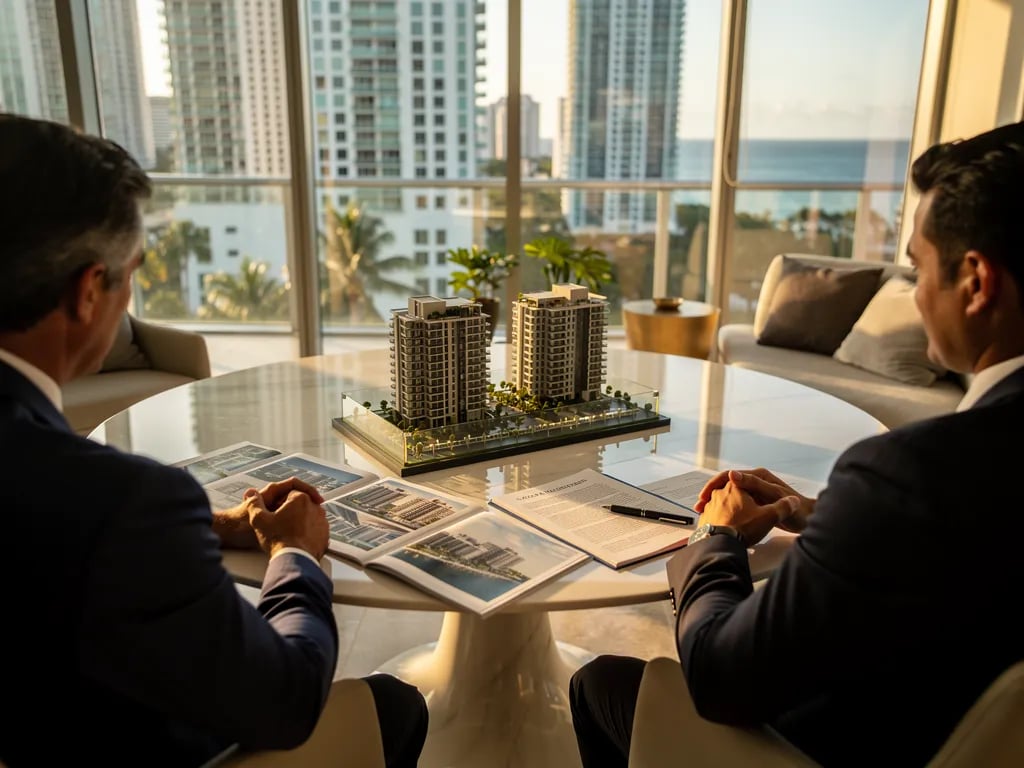
For a residential investor, the sensible approach is to underwrite a property without assuming any GTA-related increase in rent or resale value. Treat additional attention as potential upside, not as the income required to make the purchase work.
4. Short-Term Rental Interest Does Not Override Local Rules
A tempting conclusion would be to buy near a recognizable location and advertise it to visiting fans. Before considering that strategy, verify whether the intended rental use is actually permitted.
Miami Beach prohibits vacation and short-term rentals in single-family homes and many multifamily buildings in specified zoning districts. Permitted operations have licensing and advertising requirements. Association restrictions may create additional limitations.
Check the City of Miami Beach’s official rental guidance . Miami Beach rules should not be assumed to apply identically in every other Miami-Dade municipality.
The Architecture: Why the Digital Miami Feels Familiar
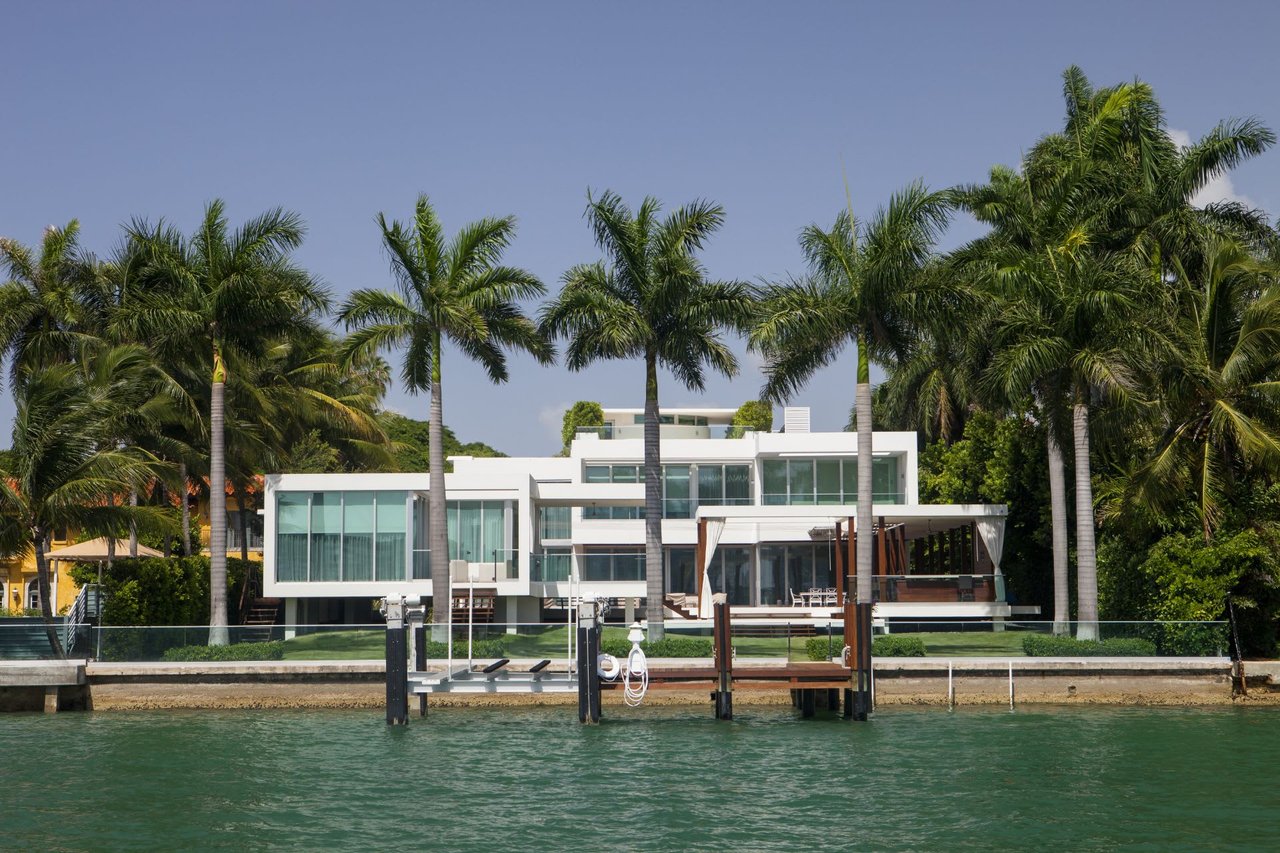
From a real estate perspective, the most interesting comparison is not simply whether Rockstar reproduced a famous tower. It is whether the relationship between buildings, streets, landscape and water feels recognizable.
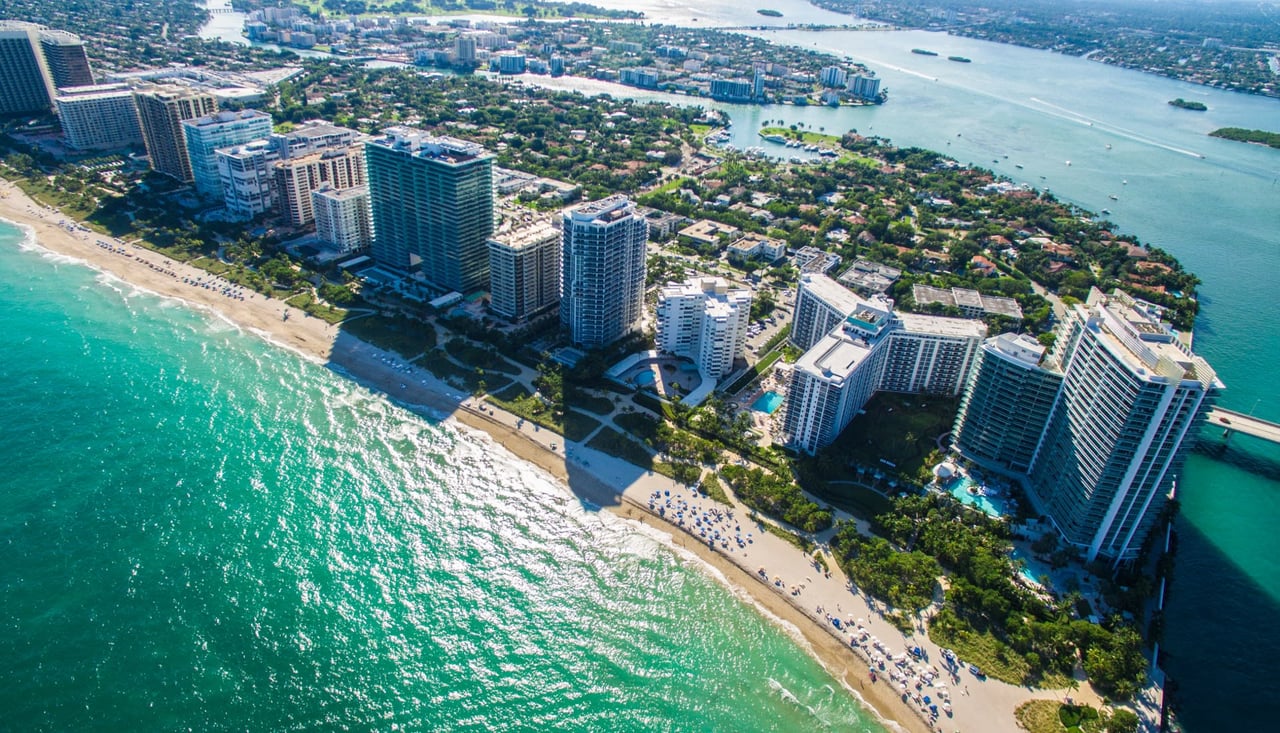
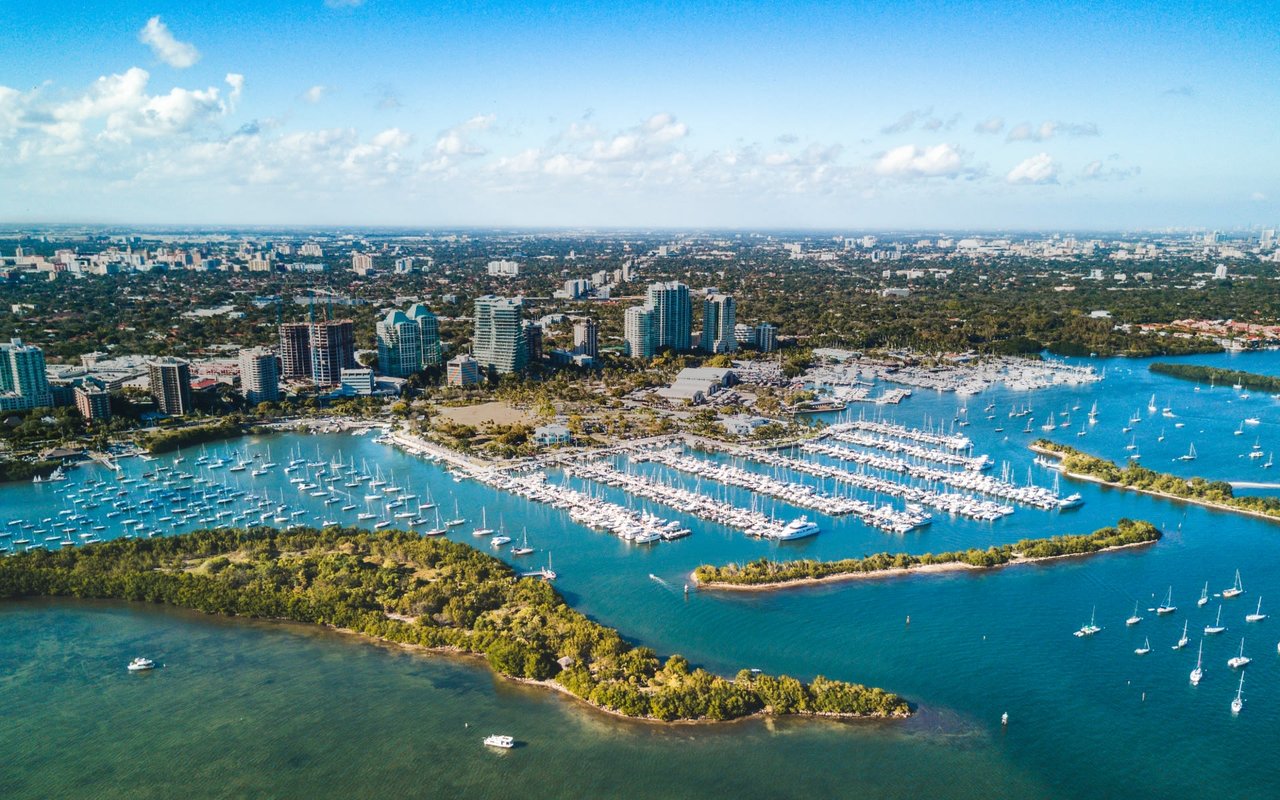
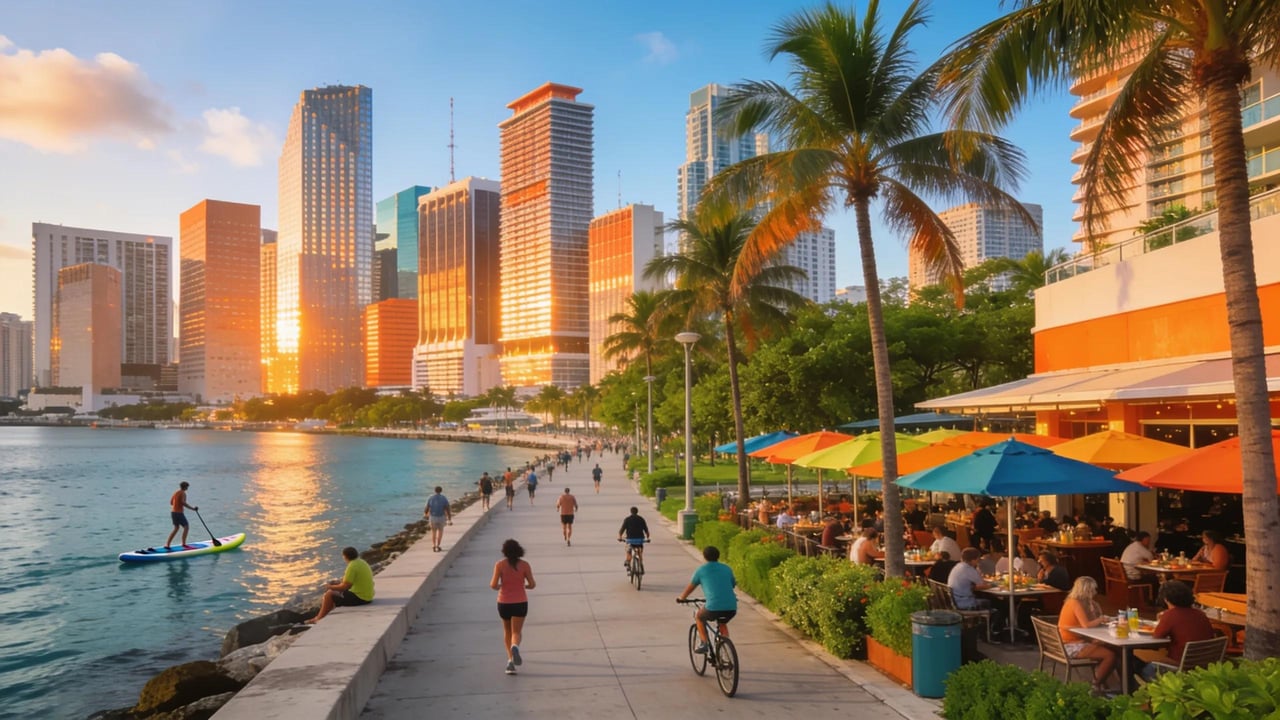
Miami’s identity is built from contrasts: low-rise Art Deco hotels beside residential towers, dense urban streets opening toward the bay, and palms and tropical light softening concrete, glass and infrastructure.
A convincing representation depends on those relationships. The height of a building relative to its neighbors, the width of a street, a balcony’s depth and the way a skyline appears at the end of a block can communicate a location before the viewer reads a sign.
That is what the following comparison is intended to explore: the real city and the visual interpretation shown in the linked video.
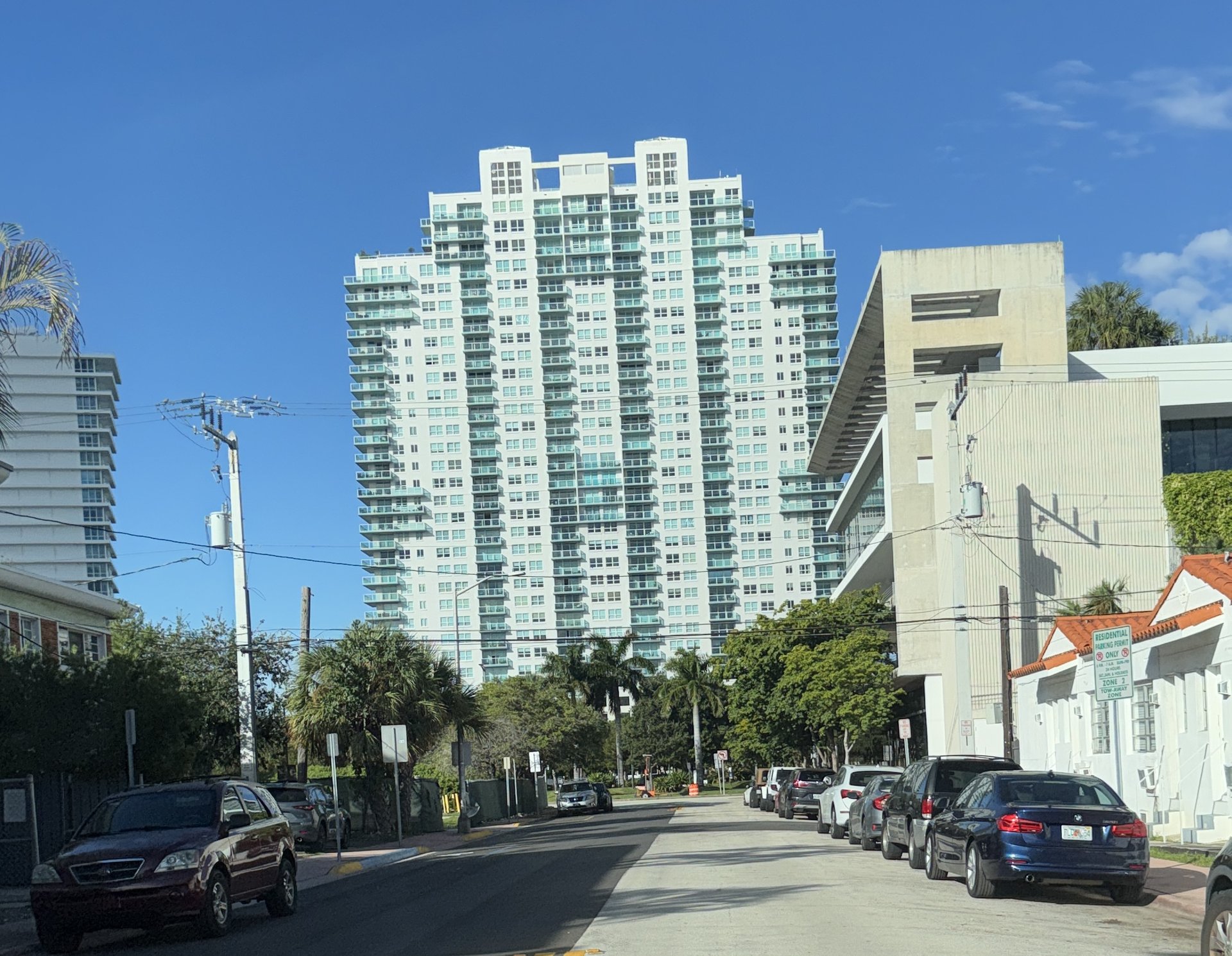
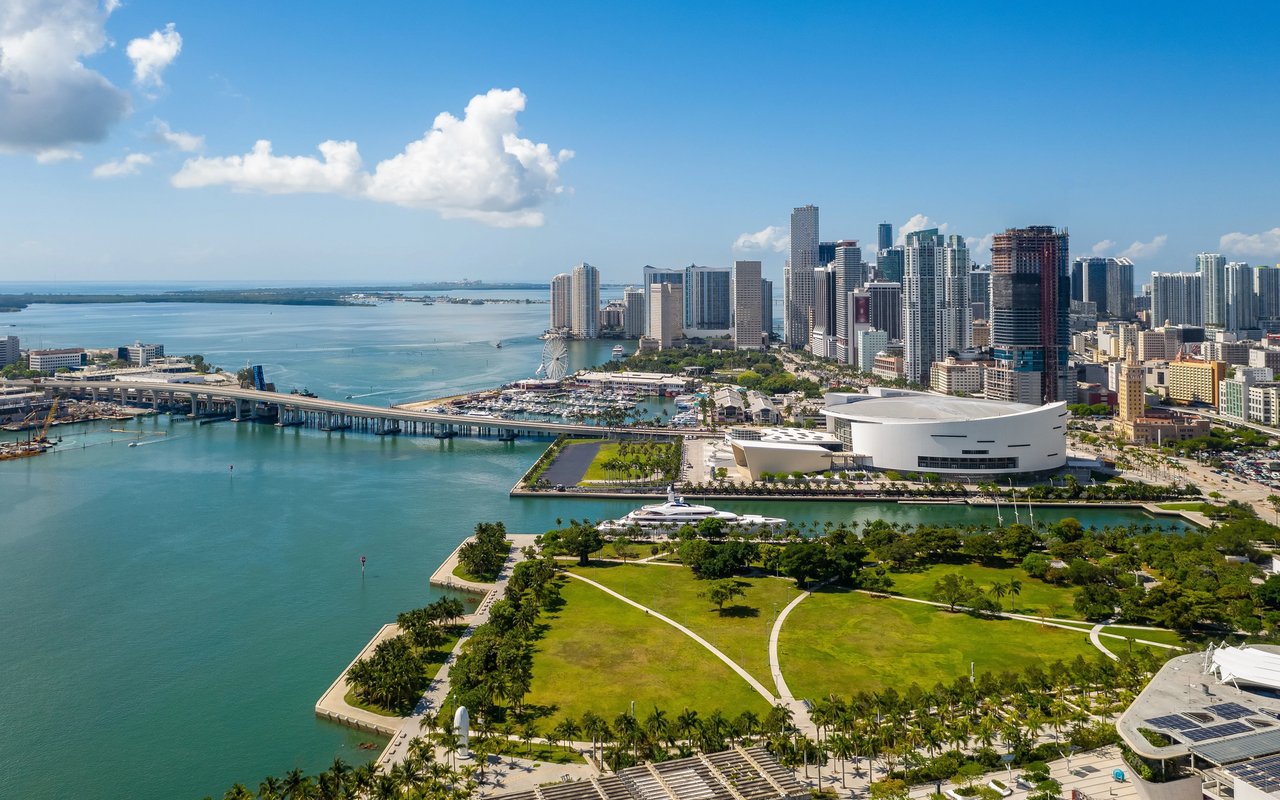
Real Miami
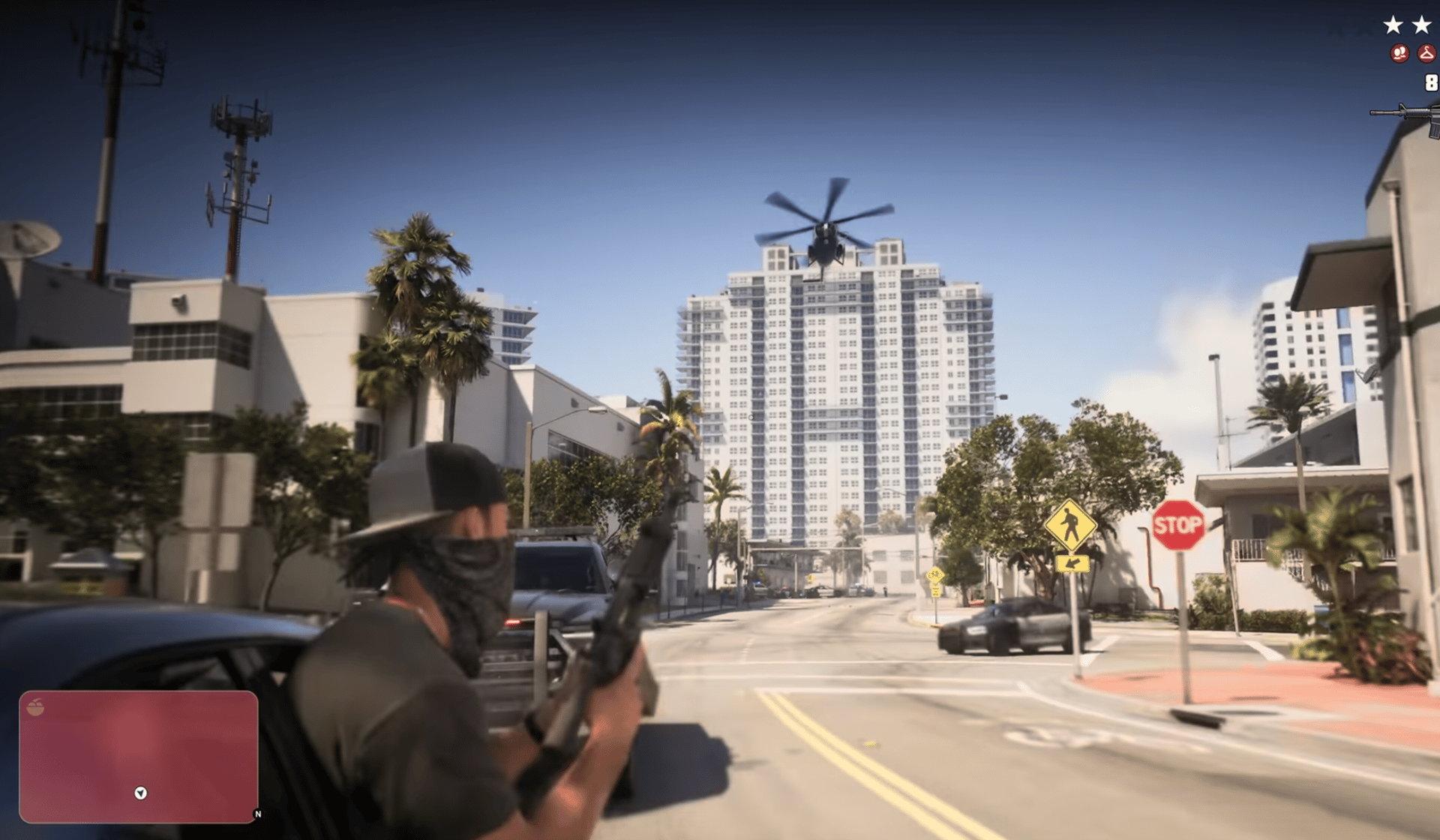
Video comparison
Visual resemblance should not be confused with a property record. A fictional city can rearrange buildings, compress distances and combine locations. Even a striking match does not establish that the digital building represents the exact address beside it.
Miami Is Bringing Vice City Into the Real World
The physical campaign is worth examining because it shows how a digital entertainment release can interact with real venues, public spaces and neighborhood identity.
Here are the installations and partnerships to look for, with particular attention to what they represent beyond a photograph.

Kaseya Center: A City Landmark Becomes Campaign Media
The rooftop “Welcome to Vice City” sign connects the campaign to one of Miami’s most recognizable waterfront venues. The arena also hosts the HEAT’s A Night in Vice City on November 18, with themed programming, a special court and a new uniform.
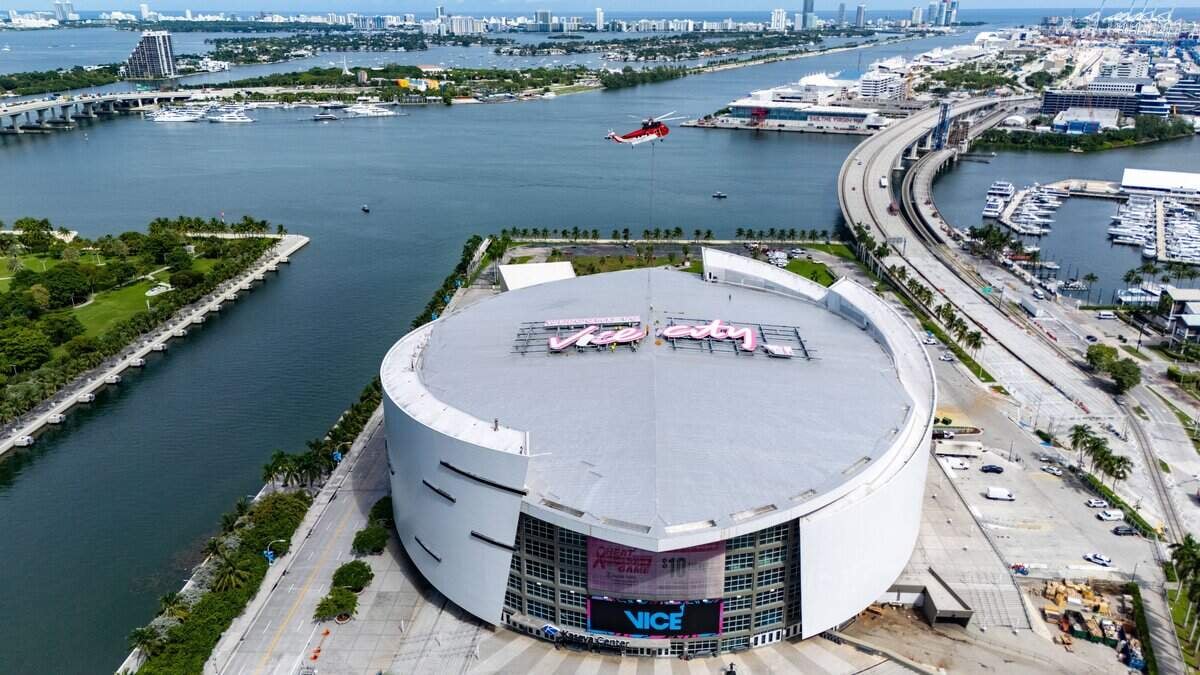
For the city, this is a connection between entertainment, sport and place branding. For nearby businesses, the relevant question is whether event visitors spend outside the venue as well as inside it.
Official event details · 601 Biscayne Boulevard, Miami.
South Beach: Vice Beach Signs, Umbrellas and Muscle Beach
Reported campaign elements include the Vice Beach sign in Lummus Park, pink-and-blue beach furniture at participating concessions and branding around Muscle Beach.

Their appeal is that they sit within an already recognizable landscape. The beach, outdoor fitness culture and Ocean Drive architecture were part of Miami’s identity before the promotional branding arrived.
The real estate lesson is not that a nearby apartment suddenly deserves a higher valuation. It is that distinctive, recognizable public spaces can carry marketing value for the broader destination.
Wynwood Walls: A Partnership With a Local Cultural Benefit
Wynwood Walls’ partnership with Rockstar includes artwork connected to the game and complimentary museum admission for qualifying Miami-Dade residents through 2028.
This is a more tangible community outcome than impressions or online views. Residents receive an identifiable benefit, while the neighborhood’s art becomes part of an international cultural conversation.

Official partnership and resident-access information · 2516 NW 2nd Avenue, Miami.
Mana Wynwood: Turning a Release Into a Physical Event
Rockstar and PlayStation have announced GTA VI: The Festival at Mana Wynwood on November 21, with performers including Travis Scott, Cardi B, Metro Boomin and Justice.
A ticketed music event is a clearer example of potential near-term economic activity than a speculative increase in home values. It brings an audience to a real venue, although its additional impact still needs to be measured.
Official festival information . Age restrictions, ticket requirements and current availability apply.
Temporary beach installations are described in local campaign coverage . Confirm current placement and access before visiting.

Is This Positive for Miami? The Answer Is Not Entirely One-Sided.
The Potential Benefits
At its best, the moment can introduce new audiences to Miami, support participating businesses and create opportunities for local artists and cultural organizations. Some visitors may discover neighborhoods they would otherwise have overlooked.
The strongest outcome would be attention that continues beyond launch week and supports local businesses without weakening the qualities that made the neighborhoods interesting in the first place.
The Trade-Offs
More visibility can also mean crowded public spaces, additional traffic and commercial branding in places residents use every day. These are potential pressures to monitor, not impacts we can already quantify.
There is also a reputational tension. Grand Theft Auto is satire built around crime and exaggerated behavior. Its fictional version of Miami is not a factual account of the city or its communities.
For investors, another risk is narrative-driven pricing: buying because a location is receiving attention while overlooking operating costs, restrictions or weak building finances. A culturally relevant address can still be a poor investment.
What We Would Watch Before Calling It a Real Estate Effect
Signal | What it can tell us | What it cannot prove alone |
|---|---|---|
Miami-related searches | Growing curiosity | Actual travel or purchases |
Hotel bookings and room rates | Potential hospitality demand | Demand caused specifically by GTA VI |
Local business sales | Whether attention is converting into spending | A lasting improvement in property income |
Qualified property inquiries | Possible buyer interest | Completed transactions |
Closed sales and achieved rents | Actual market outcomes | A causal GTA premium without further analysis |
Comparisons also need to account for Miami’s seasonal visitor patterns, other events, changes in available rooms or homes, and broader economic conditions. A stronger November than October does not establish a video-game effect.
Our Take: Enjoy the Moment. Underwrite the Property.
GTA VI could become another chapter in the way the world imagines Miami. The architecture, water, nightlife and neighborhood contrasts give the game a recognizable identity. The real-world partnerships show that the city is participating in that cultural moment rather than simply serving as inspiration.
That matters. It just does not remove the need to evaluate a property on its own merits.
Before investing, understand permitted use, association rules, reserves, insurance, taxes, maintenance, realistic rental demand and comparable sales. Ask whether the investment still works if the promotional signs disappear and the additional attention produces no measurable increase in income.
If the answer is yes, the cultural visibility may be a welcome bonus. If the answer is no, Vice City is not the missing piece in the financial model.
Continue exploring: Miami neighborhoods, new developments and how to evaluate a Miami condominium .
Independent editorial analysis as of November 15, 2026. Potential market effects discussed here are scenarios, not forecasts or established causal findings. No appreciation, rental income or investment return is guaranteed. Verify property-specific legal, financial and operating requirements with qualified professionals. This article is not affiliated with or endorsed by Rockstar Games or Take-Two Interactive. Trademarks and third-party media belong to their respective owners.