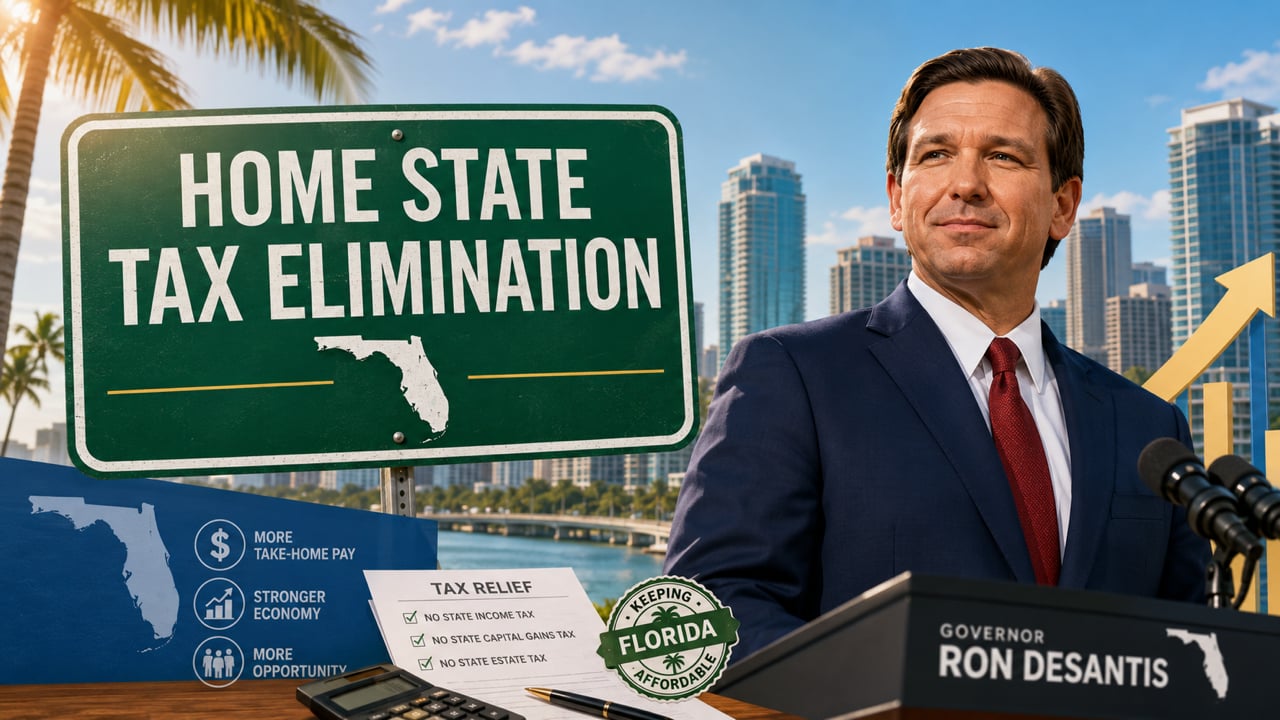
Florida's 2026 Homestead Property Tax Amendment, sponsored by Senator Bryan Avila (R-Miami Springs), a local Miami legislator with deep community ties, introduces meaningful changes that could reshape tax bills and ownership strategies for Miami's luxury homeowners and investors. This update clarifies who qualifies, how exemptions are calculated, and what the likely savings look like — information that matters when you're managing high‑value real estate in a fast-moving market. Below, we break down the amendment's key provisions, eligibility rules, projected savings, and practical implications for Miami's luxury sector so you can plan with confidence. For the full official press release and detailed legislative text, see Senate's press release on HJR 1-F.
Key Provisions
What Are the Key Provisions of the 2026 Florida Homestead Property Tax Amendment?
The amendment revises eligibility rules and reclassifies certain properties — moves designed to broaden access while tightening documentation and valuation standards. For luxury homeowners in Miami, the changes aim to recalibrate exemptions to reflect updated property categories and valuation practices. It also includes groundbreaking provisions addressing funding protections and a framework for potential future elimination of property taxes.
Which changes does the amendment introduce to homestead exemption eligibility rules?
Under the amendment, applicants must supply clearer proof of residency and ownership as part of the application process. A significant new feature provides that new Florida residents receive a $50,000 homestead exemption for their first four years of residency, with eligibility for the $250,000 "super exemption" beginning in their fifth year.
Expect stricter documentation requirements and new verification steps intended to ensure exemptions reach qualifying Florida residents while reducing improper claims.
How will the amendment affect exemption amounts and property classifications?
The amendment adjusts exemption amounts and redefines property classes, which can alter taxable values for high‑end properties. In practice, this means some luxury homes may see different exemption levels based on updated valuation criteria and the new classification framework, including tiered exemption applications depending on years of residency.
Eligibility
Who Qualifies for the Expanded Homestead Exemption in Miami's Luxury Real Estate Market?
The expanded rules create opportunities — but qualifying depends on meeting the revised documentation and residency standards. Luxury owners should review the new thresholds and evidence requirements to determine eligibility.
What eligibility criteria must Miami luxury homeowners meet under the new amendment?
To qualify, luxury homeowners must demonstrate permanent Florida residency and clear proof of ownership, with filings within stated deadlines. As noted, new residents benefit from a $50,000 exemption for the first four years, becoming eligible for the $250,000 exemption in year five. Typical supporting documents include tax receipts, utility bills, and other records that establish both residency and ownership for the property in question.
How do property types and valuations influence exemption qualification?
Property type and assessed value now play a larger role in exemption treatment. The amendment introduces tiers where higher‑valued residences may face additional or different qualification steps. Reviewing your most recent assessment and comparing it to the updated criteria will clarify how your property is affected.
Important for International & Non-Resident Buyers
The homestead exemption is reserved for permanent Florida residents who can prove residency. Non-resident investors — including international buyers who hold Miami property as a second home or investment — do not qualify and should not rely on this exemption when modeling ownership costs. Other Florida tax advantages (no income tax, no estate tax) remain fully available.
Tax Savings
What Are the Projected Property Tax Savings for Miami Luxury Homeowners in 2026?

Projected savings vary by property value and local millage rates, but for many luxury owners the amendment can translate into meaningful tax relief. Accurate projections require comparing your property's market value, assessed value, and the new exemption mechanics.
Want to benchmark your property's current value before modeling tax scenarios? Use our free home valuation tool as a starting point.
How to calculate estimated tax savings using current Miami luxury home valuations?
Start with your most recent appraisal or market valuation, then model scenarios that apply the revised exemption amounts and anticipated millage rates. Running multiple scenarios — conservative, median, and optimistic — will give you a realistic range of possible savings for 2026.
Which factors affect the range of exemption benefits for luxury properties?
Savings depend on local market trends, the final interpretation of the amendment, property age and condition, and municipal tax rates. Legislative adjustments or local assessment practices can also widen or narrow the benefit range, so ongoing monitoring is essential.
Investment Strategy
How Does the Amendment Impact Real Estate Investment Strategies in Miami?

Changes to homestead rules should factor into acquisition, holding, and disposition strategies. Reduced tax burdens for qualifying properties can improve cash flow and returns, while new documentation requirements may affect how investors structure ownership and residency plans. Use robust valuation tools to inform these decisions.
Owner-Occupants
Full exemption access — $50K immediately, $250K from year five. Lower effective tax cost improves affordability and supports higher resale values.
Non-Resident Investors
Exemption not available. Factor full property tax liability into returns. Use the Investment Calculator to model net yields accurately.
What advantages does the expanded exemption provide for luxury real estate investors?
For investors who can align ownership and residency structures with the new rules, the exemption may lower annual tax expenses and enhance net yields. That improved cash flow can support reinvestment, renovations, or expansion within the Miami luxury market — provided investors meet residency and filing requirements where applicable.
What market trends are emerging in Miami's luxury sector post-amendment?
Anticipated trends include increased buyer interest in qualifying properties and a potential uptick in valuations where tax savings materially change ownership costs. Keep a close eye on demand shifts, pricing behavior, and inventory movement to identify tactical opportunities. For help, use a detailed home search and valuation resources.
How to Apply
What Are the Step-by-Step Procedures to Apply for the Florida Homestead Property Tax Exemption?
Applying correctly is essential to secure benefits. The process centers on submitting verified documentation to your local property appraiser by the stated deadlines and following required filing procedures.
Which documents and deadlines are required for Miami homeowners and investors?
Gather proof of identity, deeds or title documents, and evidence of Florida residency (utility bills, voter registration, driver's license). File by the local deadlines to ensure the exemption applies for the tax year; missing the deadline can defer benefits to the next year.
How can applicants maximize exemption benefits through strategic filings?
Prepare documentation early, double‑check forms for accuracy, and consider professional tax or legal advice for complex cases. Timely and complete filings reduce the risk of denial and help you capture the full available exemption.
Resources & Tools
What Resources and Tools Are Available to Support Miami Luxury Homeowners and Investors?
Local appraiser offices, tax professionals, and online valuation tools are key resources. Combining authoritative guidance with up‑to‑date market data will help you assess eligibility and plan effectively under the new rules.
How to use 2miami.com's home valuation and luxury property search tools considering tax changes?
Use 2miami.com's valuation tools to benchmark your property against comparable sales and to model tax scenarios under the amendment. These tools help buyers and sellers quantify potential savings and make informed pricing or purchase decisions.
Where to find expert investment insights and updates on Florida's property tax laws?
Follow official state and county appraiser announcements, consult local tax attorneys or CPAs, and rely on reputable real estate analysis from industry specialists. Regular updates from these sources will keep you aligned with policy interpretations and implementation timelines.
The Bigger Picture
Additional Provisions and Protections Included in the Amendment
What local government functions are protected under the new funding safeguards?
The amendment explicitly protects funding for core local government services including public safety, infrastructure, flood control, parks, libraries, and municipal services. This ensures these essential services retain stable funding despite changes to property tax revenues, addressing concerns about potential budget shortfalls.
How does the amendment protect small businesses and non-residential properties?
The amendment reduces the local assessment cap from 10% to 5%, a strategic move aimed at preventing local governments from shifting the property tax burden onto small businesses and non-residential properties. This cap limits how much assessed value for these properties can increase each year, offering taxpayers greater predictability and protection.
Is there a plan for eventual elimination of property taxes?
Groundbreaking Provision
Yes. The amendment mandates local governments to provide a pathway towards the potential full elimination of property taxes. This framework encourages progressive tax reform and raises possibilities for future reductions in tax burdens on property owners statewide — unlike anything seen in any other U.S. state.
Frequently Asked Questions
Florida Homestead Property Tax Amendment 2026 — FAQ
What is the timeline for the implementation of the 2026 Homestead Property Tax Amendment?
The amendment takes effect for the 2026 tax year. Officials may issue supplementary guidance as implementation approaches, so begin preparing documents now and monitor announcements from state and county authorities for any procedural updates.
Are there penalties for failing to apply for the homestead exemption in a timely manner?
Missing the filing deadline typically means forfeiting that year's exemption and potential tax savings — you may have to wait until the next tax year. Late submissions can also trigger additional administrative hurdles, so timely filing is important.
Can non-resident investors benefit from the homestead property tax exemption?
No. The homestead exemption is reserved for permanent Florida residents who can prove residency. Non‑resident investors should evaluate other incentives or structuring options available in Florida but should not rely on this exemption.
How does the homestead amendment affect property rental opportunities in Miami?
The amendment favors owner‑occupied properties, so full‑time rentals may not qualify. Owners who occupy a property can enjoy lower tax liabilities, which can influence rental pricing and availability. If you rent part‑time, review the rules closely to determine eligibility.
Will the 2026 amendment affect the resale value of luxury properties in Miami?
Potentially. Lower effective tax costs for qualifying buyers can increase demand and support higher resale values. Sellers should track market responses and incorporate tax benefit expectations into pricing strategy.
What actions should luxury homeowners take to prepare for the upcoming changes?
Review recent assessments, organize residency and ownership documentation, and consult a tax professional to align filings with the new requirements. Early preparation reduces risk and helps you capture any available benefits when the amendment takes effect.
How can homeowners appeal decisions regarding homestead exemption qualifications?
If your exemption is denied, you can appeal through the local property appraiser's office. File the required appeal forms, submit supporting evidence, and consider professional representation to strengthen your case during the review process.
For more insights on local Miami homestead rules, valuation impacts, and luxury real estate tax structures, see our detailed coverage on the Florida homestead exemption and the Florida real estate tax structure. Comprehensive neighborhood insights including exemption specifics can be found at homestead exemption in Miami-Dade County.
Ready to Plan Your Next Move?
Whether you're buying, selling, or assessing how this amendment affects your current portfolio — our tools give you the data to decide with confidence.
Home Valuation → Investment Calculator → Search Properties →